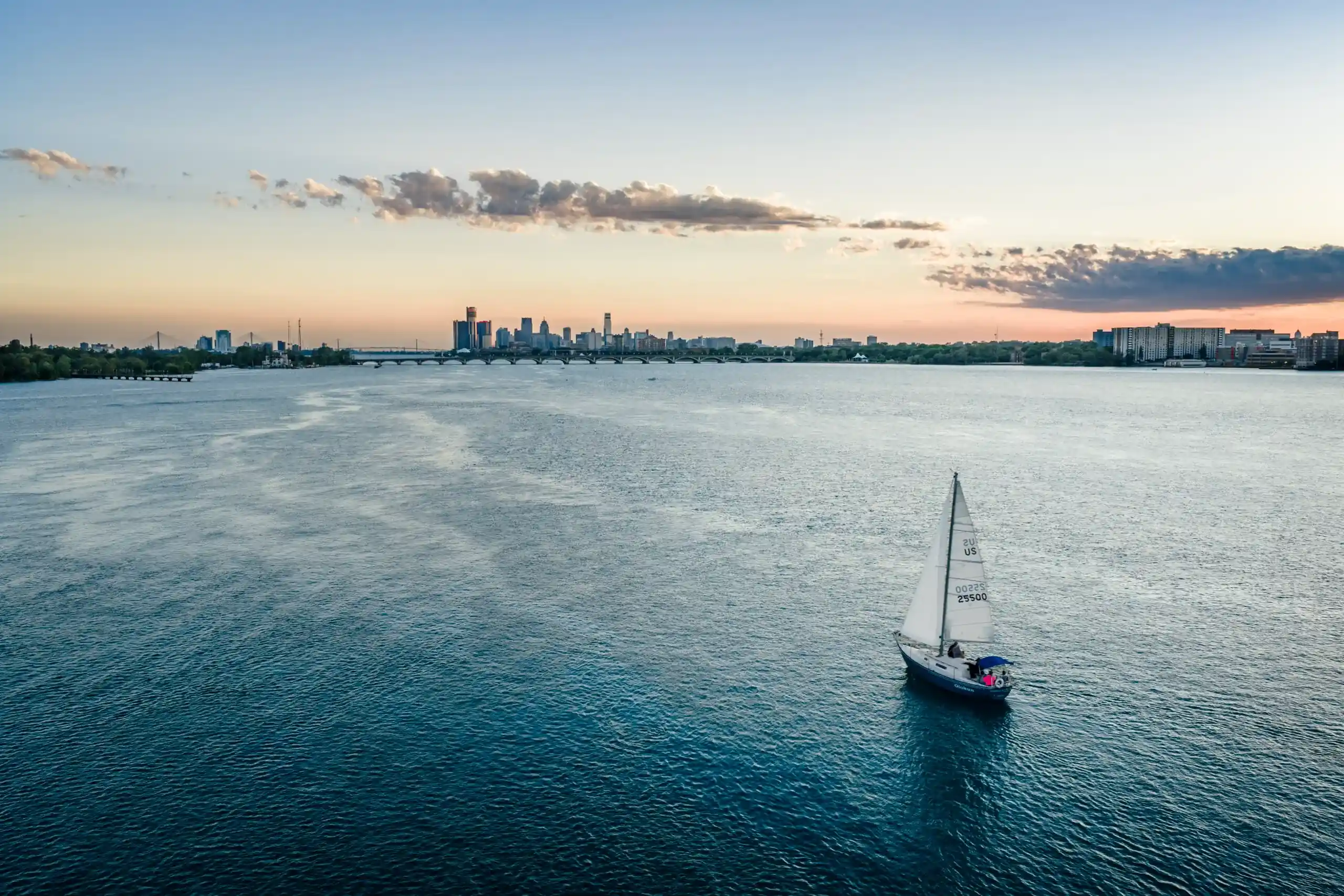
Think the outdoors takes a back seat in Detroit? Think again. The city, well known for its contributions to art, engineering, and culture, brings that energy to its natural spaces as well. Take Belle Isle Park on the Detroit River. The historic park affords an all-encompassing view of the city, including the Art Deco buildings that define Detroit’s iconic skyline, while also serving up a peek at the green ribbon of the city’s award-winning Riverwalk far below. And that’s just one example of how Detroit entices visitors and locals alike to get outside while taking in the distinct culture of this innovative American city.
Awe-inspiring Walks
Amid the steady current of the Detroit River,Belle Isle Parkhas been providing a natural escape for Detroiters since 1880. The public greenspace was partially designed by Frederick Law Olmsted, architect of New York’s Central Park. Elements like the park’s Central Avenue, canal system, beaches and wooded areas come from his original plans.
Today, Belle Island is still a place for Detroit residents to gather and enjoy time outside. You can rent kayaks and paddle through the island’s canals, walk in the northern woods or the renownedOudolf Garden, and bike around the 5.4-mile scenic loop that circles the island. That’s in addition to its many open green spaces, athletic facilities (including a 6-hole golf course), and historic buildings and museums, like theAnna Scripps Whitcomb Conservatory, the oldest continually running conservatory in the country. (Bonus: Belle Island’s Ralph Wilson Gateway is also the southern trailhead for the Iron Bell Trail that goes all the way to the western Upper Peninsula.)
Belle Isle fittingly connects with another iconic feature that blends outdoor enjoyment with art and culture—the award-winningDetroit International Riverwalk. Running 3.5 miles along the banks of the Detroit River, this greenway was named the Best Riverwalk in America by USA Today for three consecutive years (2021–2023). The Riverwalk spans the distance between Ralph C. Wilson Centennial Park and Belle Island’s MacArthur Bridge, with parks, public art, live music, and food along the way. Places likeHart PlazaandWilliam Milliken State Park and Harboranchor the experiences, with scenic views of the Detroit River throughout.
Art Around Every Corner
From the Riverwalk, it’s a quick detour to continue on bike or foot and see some of Detroit’s world-renowned public murals. Along the nearly two miles of theDequindre Cut Greenway, you’ll spy 20 world-class murals by local artists, with more being commissioned each year. The wide path also connects the Riverwalk with theEastern Marketarea, home to one of the oldest continuously running markets in the country. On market days (Saturdays year round, plus Tuesdays and Sundays in the summer), you’ll find local produce, art, and artisans of all kinds, in addition to a fleet of local food trucks with every kind of eats you can imagine. Discover all the best sites along the Dequindre Cut Greenway by joining one ofWheelhouse Detroit’spublic tours or customize your experience on a privately guided ride.
Cruise the Dequindre Cut Greenway with Wheelhouse Detroit(Photo: Outside)
If you’re looking for more murals, check out the city’ssprawling mural map. If it seems like there’s one on every corner, that’s by design. Visitors can enjoy public art simply by wandering the city (check outThe Heidelberg Projectin the McDougall-Hunt neighborhood), while local walking and biking tours can provide additional historical and cultural context. And in Detroit, the buildings themselves are works of art. Nicknamed the Paris of the Midwest, the city’s many Art Deco and Beaux-Arts style buildings take their cue from the city’s early French influence. It’s one of thearchitectural gemsof the U.S., with many tours available to highlight must-see sights.
The Detroit Institute of Art(Photo: Outside)
But not all of Detroit’s art is found en plein air.The Detroit Institute of Art, one of the premier art museums in the country, is home to more than 65,000 works of art, spanning from early global and Indigenous civilizations to the present. The museum houses many standout pieces, including the first van Gogh in America, but its focal point is the courtyard-spanningDetroit Industry Muralsby Diego Rivera. Finished in 1933, the murals occupy four enormous museum walls and depict Detroit’s factory workers and the forces—both natural and economic—that drove the industry at the time.
Paddle and Pedal the River
The Detroit River is more than a shimmering sight to enjoy from Belle Isle or the Riverwalk. You should getonthe water, not just see it.
Detroit Sailsoffers public and private tours of the river, including specialty outings like sunset, sunrise, and full moon tours. There’s a fleet of boats to choose from and tours ranging from 75 minutes to four hours. Every trip is BYOB, so you can cheers to the downtown skyline or Belle Isle with your drink of choice.
If you’re looking for a people-powered excursion, you can rent a kayak and shove off from Belle Isle to travel the river at a slower pace. There’s also an opportunity to pedal the river with theDetroit Cycle Boat.Inspired by the “Pedal Pubs” that roll through the streets downtown, the Cycle Boat is a floating party—bring your own drinks and supply your own tunes.
One of the most unique on-the-water experiences is offered byDetroit River Sports. Located in the Jefferson Chalmers neighborhood, Detroit River Sports showcases the area’s little-known canal system, called the “Venice of Detroit.” Thetwo-hour tourwinds through quiet green spaces and urban settings alike, visiting Greyhaven Island and the historic Fisher Mansion before exploring the Jefferson Chalmers canals. It’s the kind of adventure you can’t find anywhere else—uniquely Detroit in every way. Afterward, relax and refuel atCoriander Kitchen and Farm, a great farm-to-table option nearby.
Your trip begins atmichigan.org.